Tuesday, August 15, 2017

Making a Game Maker: Hatching Chicken Wiggle 🐣


Development of Chicken Wiggle started in February, 2016 with a single image I created; an idea for a player package. The majority of Chicken Wiggle's production was done by myself and Matthew Gambrell. Matthew did the programming, music, and sound effects. I did the design, art, business, and marketing.

Please try to ignore the fact that the little red dude is the hero from Xeodrifter. :)
At that early stage, I did not know what the main player(s) was going to look like so I grabbed the nearest sprite on hand.

The main emphasis with this player package was the balance between the short jump/close attack range and the far range “hook shot” ability that enabled the player to travel up/across relatively long distances. The two extremes seemed to complement each other and rely on each other, which was a pleasing concept. Later, we decided to use the “hook shot” to stun enemies – making the close-range attack less scary to use – which really cemented the synergy between the player’s different abilities.


The core gameplay idea was originally something that could be described as a 2D Pushmo; played from a side view perspective. Draw simple images with a handful of colors to create a level, and then navigate through the level by jumping/destroying tiles of the level to reach a goal. Looking at what Chicken Wiggle ended up being, we might have gone a little further with the design and complexity of the game. Maybe a lot further.

But, before I get ahead of myself I should chat about how we decided on a chicken and a worm as the stars of the game. As shown above, with the initial player package, we started with a compact character that was the same unit size as the level tiles they interact with. This immediately puts a framework in place in terms of size and proportions. He’s basically square!

I kicked around a few different ideas for what the player could be, in terms of a theme that could work across the whole game. Some of the early candidates included a cute mountain climber with grappling hook, a kid with a yo-yo, and a bird with a worm in his backpack. None of them are technically right or wrong, better or worse. It really came down to personal preference and what we thought was fun to embrace.


The cuteness and absurdity of a bird and worm combo was too funny to resist. I experimented with many color variations to make it not look too similar to the many bird characters out there, such as those found in a certain game about birds that are angry. This led me down the path of considering a chicken instead of a “regular” bird, which immediately adds an additional level of fun and absurdity.


Initially, I adopted a similar 8-bit-ish style to Mutant Mudds, with a black outline and very few colors. This worked fine, but I further experimented with a more shaded 16-bit SNES style with colored outlines and more colors for highlights and shadows. I was much happier with this look. You’ll also notice that the worm got a lot bigger than the original bird/worm design. This was to ensure he could have visible eyes, which immediately makes him more interesting and identifiable than without – ignoring the fact that this chicken is either super tiny or has a GIANT worm in his backpack. Chicken Wiggle was born!

Wanting the game to be something really special, we let our imaginations go wild. Designing the gameplay for Chicken Wiggle was very different than designing Mutant Mudds or Xeodrifter. With Chicken Wiggle, we first had to create the level editor that the user would ultimately use in the final game before we could design any levels for the game. This was difficult, frustrating, and a little maddening. But, it had to be this way. I wanted to make sure the level editor was awesome, and what better way than forcing myself to use it to make the levels for the game itself?


Making a level editor is basically like making an application, like a paint program or a sophisticated word processor. You must think about the layout, content, interactivity of each element, and much more. It’s complex, so it takes deep forethought, some trial and error, and a lot of time to carefully build it one brick at a time. All the while, I would try to make rudimentary levels, but I had to accept they would never represent the final levels because I didn’t truly know what the final level editor product would look like until it was finished.

It took a lot of discipline and patience to wait until all of the 100+ ingredients that are at the user’s disposal were all designed, implemented, and working properly before making level 1-1. I made countless experimental levels to ensure the level editor was functioning as desired, while also exploring level design approaches. I didn’t know how I wanted to present the “game” aspect to the player, so it was a good opportunity to make lots of different styles of level designs to find the right one.

Should a single level focus on a single item that is available in the level editor, and fully explore all the ways of using that item as a way of teaching the player how the ingredients can be used? Or perhaps each level can contain any number of the ingredients, and the focus should simply be on fun!? In the end, I went with something that explores a small handful of items in a single level to show them on their own as well as how they can work with other items – all while considering a gradual difficulty curve from the beginning of the game to the end.


I have always enjoyed playing and analyzing Nintendo’s work, and especially Mario games. Super Mario World was a big inspiration for Mutant Mudds level design. But, with Chicken Wiggle I had a much larger pool of ingredients to play with! This led me to look at New Super Mario Brothers, Mario Galaxy and the newer Super Mario 3D Land/World titles. In addition to playing the games, I also watched a lot of gameplay videos on YouTube, which is great when you just want to analyze the content of something instead of how it feels. This led me to Mark Brown’s “Game Maker’s Toolkit” video series.

One particular video resonated with me in a major way and helped me cement my thoughts. It is called “Super Mario 3D World’s 4 Step Level Design" (included above). In the video, Mark dissects how the level design of 3D Mario games have progressed over the years, and culminate into a very concrete system with the release of Super Mario 3D World for the Wii U. As with most things that inspire me creatively, I try to understand the core principles of what the source is achieving and then I see how that may apply to the unique needs of what I want to accomplish in my game.

In this case, I created a seven-step level design guide to follow:

Step 1: Introduce new device in safe environment.
Step 2: Repeat device without safety net.
Step 3: Introduce new hazard.
Step 4: Repeat device with new variation and safety net.
Checkpoint
Step 5: Repeat hazard with extra challenge.
Step 6: Combination of device and hazard without safety net.
Step 7: Repeat device with safety net to reach goal.

The level above is the first level in Chicken Wiggle, after the playable intro level. Let's go through the steps! Step 1 introduces the spring device in a safe environment where it is impossible to be hurt. I also include a ring that can be grappled up to, reminding the player of the grapple ability established in the intro level. Step 2 repeats the same device while introducing death below. This ensures the player understands how to interact with the device before continuing in the level. Step 3 introduces a new hazard in the form of a stationary bat. I also included the destructible pink block (first introduced in the intro level, prior) to remind the player they can peck to destroy things. Step 4 repeats the device with a variation in a safe environment. Familiarity with a twist. Check point! Step 5 repeats the hazard with a variation. In this case it is the simplest of variations. The player is required to jump and grapple-stun and/or attack. This is to ensure the player knows this is possible and potentially expected in the future. Step 6 combines the device and hazard with death below! This allows the player to put all of what they have learned into practice in a hazardous situation. Exciting! Step 7 is a calm reward for making it to the end; the same device with another slight twist to present something familiar with something slightly new.

As you can see, this level design approach generally relies on the use of two items. One “device”, and one “hazard”. In this example the device is a spring, which makes the player bounce higher, and the hazard is a static enemy that hurts the player if collided with. Really basic stuff. Then, there can be supporting items that facilitate the level, such as solid blocks (ground, walls, and ceiling), death spikes, wind currents, and jump-through platforms, and so on, which can all help create a level flow that is interesting, varied, and/or dangerous.

And then there are the pick-ups, which can provide an addition goal and sense of accomplishment in the form of 100 gems to collect in a level and three bonus FUN letters – some of which are perhaps hidden away slightly off the main path for a sense of mystery and discovery.

Hopefully, you can see that we start to have a decent set of ingredients to play with as a designer. But, we now need figure out what to use where and why, and with what? In order to accomplish this, I listed all of the devices in a column and then in the neighboring column I tried to match them up with what could be interesting hazards. Something like this:

Springers             Blubats
Springers             Eyehoppers
Balloons               Thorny Vines
Balloons               Spike-a-boos

And so on…

Once I had a long list of every combination that I thought were decent in concept, I graded each combination with what seemed to be a suitable level of difficulty, from 1 to 5. 1 being easy, and 5 being difficult. Throw into this mix the need for ghost themed levels and levels that utilize power-ups, the list of possibilities quickly became quite huge.

I set myself the arbitrary goal of eight worlds with six levels in each – totaling 48 levels. That seemed like a reasonable number of levels for the story mode, knowing that I intended to upload “Official Atooi” levels after launch for players to download at no extra cost.

The final level list is below. It may have changed slightly once everything was in place, but this represents a fair idea of what I felt was a good way to present the ingredients of the level editor to the player in an informative and entertaining way. I don't think it's much of a spoiler, but if you would prefer not to even get a whiff of what may be in the levels you should skip over the table.

Cloud Tower
1-1
Springers
Blubats
2
1-2
Hero Mask!
Windies
3
1-3
Touchables
Eyehoppers
2
1-4
Invisibles
Vert. Flyers
3
1-5
Peckables
Blubats
2
1-6
Cloud Reprise
All
2
Treetop Tower
2-1
Balloons
Thorny Vines
3
2-2
Speed Shoes!
Spike-a-boos
3 or 4
2-3
Jumpers
Flame Heads
3
2-4
Secret Walls
Spin-a-spikes
3 or 4
2-5
Cloudaways
Slyders
3
2-6
Forest Reprise
All
3 or 4
Dusty Old Tower
3-1
Balloons
Tough Eyehoppers
3
3-2
Demo Hat!
Catbats
4
3-3
Jumpers
Slyders
3
3-4
Invisibles
Goblins
3 or 4
3-5
Touchables
Spin-a-Spikes
3
3-6
Dusty Reprise
All
3 or 4
Tubular Tower
4-1
Peckables
Mr. Bones
3
4-2
Jetpack!
Flame Heads
3
4-3
Cloudaways
Prank Imps
4
4-4
Ghost Touch!
Hori. Helmets
4
4-5
Peckables
Green Gobs
4
4-6
Tubular Reprise
All
3 or 4
Slumber Tower
5-1
Balloons
Spike-a-boos
4
5-2
All The Power
4
5-3
Accord-a-likes
Prank Imp
4
5-4
Secret Walls
Mr. Bones
4 or 5
5-5
Jelly Jelly
Thorny Vines
4
5-6
Reprise 5
All
4
Temple Tower
6-1
Rollabouts
Tough Eyehoppers
4
6-2
Hero Mask!
Spin-a-spikes
4
6-3
Springers
Eyehoppers
4
6-4
Invisible
Growers
3 or 4
6-5
Switcharounds
Cannon-ons
4
6-6
Reprise 6
All
4
Under Construction
7-1
Jelly Jelly
Eyehoppers
4
7-2
Jetpack!
Tough Green Gobs
5
7-3
Balloon
Catbats
4
7-4
Secret Walls
Reactors
5
7-5
Switcharounds
Tough Eyehoppers
4
7-6
Reprise 7
All
5
Tours De Dessert
8-1
Touchables
Slyders
5
8-2
Demo Hat!
Prank Imps
5
8-3
Rollabouts
Spin-a-spikes
5
8-4
Invisible
Vert. Helmets
5
8-5
Jelly Jelly
Tough Green Gobs
5
8-6
Reprise 8
All
5

The really exciting thing for me was that the story mode all focused around the “Rescue Friend” gameplay rules in the level editor. This fit with the story presented at the beginning of the game. However, there are five other gameplay rules to choose from: Grab the Loot, Remove Meanies, Lock & Key, Take Me Home, and Destroy Blocks. These are rules I will be exploring with the Official Atooi levels that will be available for players to download.


In the end, Chicken Wiggle drew on a collection of different games for inspiration. Super Mario Maker for the whole level creation aspect, Banjo-Kazooie for the duo and backpack and classic story vibe, New Zealand Story for some art and level design styles, and The Magical Quest Starring Mickey Mouse for art style and some music style. I’m sure there are many other sources of inspiration for the game, but these stand out in my mind.
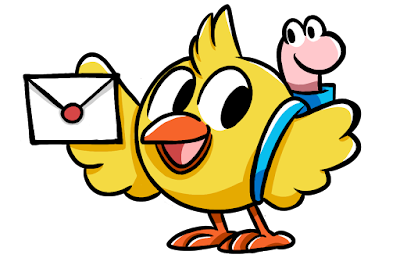
Illustration by @anniemae04

We finished the development of Chicken Wiggle and submitted the game to Nintendo for lotcheck approval on June 9, 2017 – 16 months after we started. After two failed attempts and some fixes later, Chicken Wiggle was approved on August 2, 2017. The game could have been released on August 10, 2017 in North America, but with the additional time and complexities involved in a European launch due to the number of countries, the earliest simultaneous release possible was August 17, 2017.

Thanks for reading, and happy gaming!


Monday, December 5, 2016

Mutant Mudds Double Pack - PSN Exclusive!


Mutant Mudds Double Pack!

I am delighted to announce that we have partnered up with our pals at Nighthawk to create a very special muddy bundle coming soon to PlayStation! For the first time ever, Sony players will be able to get their hands on our all-new Muddy sequel, Mutant Mudds Super Challenge, as well as the award-winning game that kicked off the whole muddy invasion on PS3 and PSVita in 2013: Mutant Mudds Deluxe. That’s right! You get both games for the price of one, marking the arrival of the classic Mutant Mudds Deluxe for PS4 on December 6, 2016. The Mutant Mudds Double Pack will be available for a limited time only, so act promptly to take advantage of this very muddy offer. Coming to PS4 and PSVita!


You know something that’s really cool about this offer? Not only do you get to save a ton of money, you also have the perfect tools to become the ultimate masher of muddiness. How so? Well, some folks find the difficulty of the sequel, Mutant Mudds Super Challenge, a real slap in the face without prior experience of the first game, whereas veterans of the original are frothing at the mouth for moar spikes! So, if this is your first time battling the mucky mutants, you can start your adventure with the original game, Mutant Mudds Deluxe, to hone your skills before bringing the pain to the deplorable dirt bags in Mutant Mudds Super Challenge, which includes six epic boss encounters that are sure to test your mettle!


While you count the seconds until this very special bundle is available, please take a journey with me down muddy memory lane…

It all started in 2011. We were busy working during the day on projects with publishing partners, while in the evenings we were working on our passion project. At the time we didn’t even have a name for the game. We just knew we wanted to make a fun and solid platforming experience that captured what we loved about the NES and SNES era of gaming.

One of the first features we got working in Mutant Mudds was the ability to leap between three playfields via launch pads, taking you far into the background or close-up in the foreground. I remember when we finally got this working in the game, and it blew me away. I’d always wanted to jump into the background. To create this effect, it took a combination of many things. First off, we displayed the far background at a much higher resolution than the other layers, and from there we scaled up everything 200% to create the middle playfield. The foreground layer was scaled up 300% from the background source.


Next, we applied a distance tint or fog effect to the background to push it back a bit. In the foreground we created a silhouette effect by having all of the platform art transition to black. And the final touch that really established the sense of depth came from a focus effect that blurred the layers slightly based on the player’s location. If the player was in the middle layer, both the background and foreground would be slightly blurred. When the player leapt into the background, the middle layer became slightly blurred and the foreground got even more blurred. I hope you agree that the final results work pretty well to create a fun and unique setting.

To create a sense of progression across the game and also ramp up the challenge gradually, I spent a great deal of time categorizing the different types of challenge ingredients that we created for the game and listing them in order from easy to difficult. This included not only enemies and hazards, but also small jump, long jump, crouch to avoid projectile, and many other details of the player experience. I then created a table that listed all of the challenge ingredients and all of the levels, adding a checkmark where each element was introduced first to the player. This enabled me to craft a few things. It helped me set a gradual difficulty curve throughout all of the levels in the game, and also ensure new elements were introduced to the player over the course of their experience to keep things interesting. It is this aspect that makes the original game a great primer before jumping into the sequel. The sequel is quite different in this regard!


When it came time to create a sequel to Mutant Mudds we immediately thought of the Lost Levels from the Super Mario Bros. series. The Lost Levels was the official sequel to Super Mario Bros., released in Japan. However, it was deemed too challenging for North America at the time and was replaced by a different “Super Mario Bros. 2” in the form of an adaptation of Yume Kōjō: Doki Doki Panic.

We loved the idea of what Lost Levels set out to do: give fans of the original game a literal continuation of the first experience with increased difficulty. Even though that was the seed of the idea for Mutant Mudds Super Challenge, we also took the opportunity to add a ton of new content that we felt would improve the overall experience, such as boss encounters, all-new level art themes and music, secret passageways, new pick-ups, 20 hidden playable characters, and unlockable soundtrack (featuring over 40 tunes)!


The biggest difference with Mutant Mudds Super Challenge is the fact that there really is no difficulty curve. It starts out hard, and continues to be hard. Even the intro levels pulls no punches. You may die. A lot. We added a handy death counter so you can keep track of your failures. Yeah, sorry about that. To counter that slap in the face, you’re able to visit any of the levels in the main worlds from the beginning. So, if a particular level is giving you a hard time, you can visit a different level and come back at a later time with a fresh perspective.

Something that makes our job so satisfying is when we hear positive feedback from players who are enjoying our games. It is truly a magical thing. One of the biggest highlights for me was when Shuhei Yoshida tweeted out his Muddy progress from a flight he was taking from US to Japan. When the President of Worldwide Studios, Sony Interactive Entertainment shares his enjoyment of your game, you’re having a great day! When Mutant Mudds Super Challenge released on Vita, he even went on to say it was a sequel to his “favorite action platformer.” We love you Yosp!


Thank you all for your support. I hope you enjoy the special bundle we have put together for you. Please share your experience with me on twitter. You can find me here: https://twitter.com/JoolsWatsham. Peace!

North America


Friday, November 4, 2016

Healthy Time for Indies?

Every videogame developer/publisher faces the decision of which platforms to support with their new creations. Often, this decision is based on where they believe they can sell the most copies of their game, but sometimes is it influenced by an emotional bias. As far as I know, no one has a crystal ball that shows us the future, which means all decisions have the potential for success and failure – although, the odds for success are surely on the side of those who use market data to help them decide.

The videogame industry is at an interesting point in time with the PlayStation 4 and Xbox One both now three years old (first released in North America November 2013), and we have the recently unveiled Nintendo Switch home console / handheld platform on the horizon (set to release in March 2017). The Nintendo 3DS is over five years old (first released in Japan February 2011), and the Nintendo Wii U is four years old (first released in North America November 2012). Sony’s often forgotten handheld device, the PlayStation Vita, is now five years old (first released in Japan December 2011). And, finally there’s Steam as the #1 source for PC/Mac games – a huge market!


Based on previous platform cycles, we have at least four or five years of PlayStation 4 and Xbox One support before we potentially see their replacements released. It is difficult to predict how the Nintendo 3DS market will be impacted in 2017 with the release of the Nintendo Switch, considering its hybrid nature. It is likely Christmas 2017 will be Nintendo’s last big push for the Nintendo 3DS. Sadly, the Wii U’s era has come to a premature end, having never reached its potential in the market. I think the PlayStation Vita still has some life in it, especially for enthusiasts, but no one knows when or if we’ll see another handheld from Sony.

In the home console market, PlayStation 4 is the current leader over Xbox One in terms of hardware units sold to date. Sony announced PlayStation 4 has sold over 40 million units, compared to a speculated 20 million Xbox One units. In the handheld space, Nintendo 3DS has sold over 61 million units, compared to a heavily speculated/debated 10 million PlayStation Vita units. The Wii U has sold over 13 million units. I am not sure if there is an accurate estimate of how many active Steam users there are, but I think it is safe to say that it is likely tens of millions.


61 million | Nintendo 3DS
40 million | PlayStation 4
20 million | Xbox One
13 million | Wii U
10 million | PlayStation Vita
TBD | Nintendo Switch
Tens of millions | Steam

So, where does this leave developers who want to release their games in the future? The clear favorites are PlayStation 4, Nintendo 3DS, and Steam with a tremendous number of hardware units in their respective home console / handheld / computer markets. However, these software markets are all highly competitive with a great selection of first-party and third-party titles to choose from and many more high-quality titles on their way. The Xbox One and PlayStation Vita also have great software libraries, with the PlayStation Vita currently seeming to lag in software support compared to Xbox One. Sadly, releasing titles on the Wii U right now is probably unwise. Fortunately, there are plenty of other healthy markets to consider.

Let’s throw the Nintendo Switch into the mix. In contrast to the reveal of Wii U, the Nintendo Switch has generally been received very positively by the public, gaming enthusiasts, and the media. What was a confusing and fumbled message with Wii U, is a clear and interesting concept with Nintendo Switch. The Nintendo Switch is different, fresh, and intriguing. None of these things could have been said to describe the Wii U reveal.


For indie developers, the launch window of a new platform can be a great opportunity to release new original games. It is a time when players are generally more willing to consider buying new games to get the most out of their new hardware purchase. It is also a time when the number of titles available is at its lowest, potentially offering less competition. However, there is likely strong first-party and third-party AAA launch titles to compete against. The best strategy is to not directly compete with the big AAA titles, but offer your own unique experiences instead.

Since a new hardware release begins with zero hardware units sold, the sales potential can be difficult to determine. In the case of Nintendo Switch, it seems likely that it will have a better launch than Wii U, but that sadly is not saying much. In the month of January that followed the Wii U’s November launch, only 57,000 units were sold. By comparison, the original Wii sold 435,000 in January, also two months after launch.


As such, putting faith into the sales potential of an exclusive launch title on a new hardware platform is a risky endeavor. Therefore, we often see ports of older games at launch from third-parties, or we see non-exclusive new titles that are included as part of a multiplatform launch strategy. In some cases, the hardware manufacturer may be able to offer incentives for developers/publishers to release exclusive content within the launch window of a new platform to counter the increased risk.

All things considered, the best strategy for the average indie developer at this time seems to be a multiplatform approach. If you want to support a single platform, there is not a definitive option. Steam, Nintendo 3DS, and PlayStation 4 offer the largest install base, which is important, but they also have extensive software libraries to compete with. However, they do still offer great potential for a single platform release, with each having very different audiences. The type of game you are releasing will play a big part in which market might be best suited.


For technical and logistical reasons, not everyone can support a multiplatform release. In my experience, a staggered release of a title on multiple platforms can have negative results. I believe a simultaneous release on all platforms is the best bet for maximum exposure of your game in the press and subsequently, potentially greater overall sales due to this. If a small delay is unavoidable, I think a week or two delay between platform releases will result in minimal loss of momentum/exposure/sales potential. Larger delays between platform releases will result in loss of buzz with less media coverage, and result in potentially less sales.

For the past 10 years with Renegade Kid, we released our games primarily on Nintendo handhelds. Fortunately, the Nintendo DS and Nintendo 3DS were both successful in hardware sales. As a small developer, with minimal overhead, we could develop big games on small budgets. When we had the bandwidth to bring our games to other platforms, it was typically many months after the initial launch of the game. This resulted in less media coverage/excitement and therefore less-than-stellar sales.


Unfortunately, we are not currently able to consider releasing a launch title for Nintendo Switch, because Nintendo of America has restricted developer access to Nintendo Switch information. As a consumer, I am very excited about the Nintendo Switch. I’ll be buying it on day one! As a developer, however, we must wait until we are given developer access to the platform before we can consider Nintendo Switch for any of our future titles. It appears many indies in North America are in the same boat as us, whereas many indies in Europe already have access to Nintendo Switch devkits.

We have two new games currently in development. Chicken Wiggle will be released exclusively on Nintendo 3DS in early 2017. If it is received well, we will consider bringing Chicken Wiggle to other platforms at a later date. The other game we’re finishing up is the eagerly anticipated Treasurenauts, which was first revealed way back in 2013. Due to various reasons, the game has been put on hold numerous times to enable us to complete the development of smaller games. Thanks to the partnership with our good friends at Nighthawk, we are finally able to finish the game properly and fully realize its potential.


Treasurenauts is an interesting title because it is the type of game that could work very well as a multiplatform release. It features a fully-fledged single-player campaign as well as cooperative multiplayer “couch play” for two players on a single system (split-screen). Even though the game started out as a humble 3DS title, it has since increased in ambition and scope. As such, we brought home consoles into the plan long ago to maximize the games’ potential in terms of player-enjoyment and hopefully sales. I will have information to reveal on the release date and the supported platforms for Treasurenauts soon.

In closing, I think it is a healthy time for indies to release their own games. There are some clear favorites in regards to potentially successful single-platform markets, and some great opportunities for multiplatform releases. The future inclusion of Nintendo Switch is sure to add one more healthy option for indies to consider for their creations. It’s a good time to be indie.

Thanks for stopping by. Please share your thoughts below.

Monday, August 29, 2016


RENEGADE KID FOUNDERS EMBARK ON
NEW SOLO VENTURES

One chapter ends.
Two new exciting chapters begin!

AUSTIN, Texas – August 29, 2016 - Renegade Kid has announced that its co-founders, Jools Watsham and Gregg Hargrove, have made the difficult decision to bring their 10-year partnership of developing games together as Renegade Kid LLC to an end.

With their friendship and respect for each other still very much intact, Watsham and Hargrove will continue developing videogames under the names of their new companies: Atooi and Infitizmo.

The award-winning library of Intellectual Properties that Renegade Kid has created over the past decade will be finding new homes. All of Renegade Kid’s “2D” games, including the Mutant Mudds series and Treasurenauts, will become the property of Atooi. All of Renegade Kid’s “3D” games, including the Dementium series and Moon Chronicles, will become the property of Infitizmo.

We hope you will share in the excitement that both Jools and Gregg feel for their new journeys. You can follow their progress on twitter: @AtooiLLC and @InfitizmoLLC.

About Renegade Kid LLC
What started with Dementium: The Ward in 2007 turned into a fruitful decade of developing top quality games in many different genres, including first-person shooters, racing games, 2D platformers, and even cutesy puzzlers! With 14 titles contributing to their prolific legacy, Renegade Kid has received numerous awards, much critical praise, and dedicated fans – which is all truly appreciated. The spirit of Renegade Kid will live on through Atooi and Infitizmo!

About Atooi LLC
Retro roots. Modern mojo. Founded in 2015 by Jools Watsham, Atooi is focused on the development of retro inspired games that capture the essence of the past and unite it with the magic of tomorrow. Atooi properties: Mutant Mudds series, Xeodrifter, Bomb Monkey, Treasurenauts, and Totes the Goat. For more information, please visit http://www.atooi.com. 

About Infitizmo LLC
Infitizmo, a multimedia company founded by Gregg Hargrove in 2016, blends interactive gaming, music, and web-based storytelling to create a fun and multifaceted entertainment experience. Infitizmo properties: Dementium series, Moon Chronicles, and ATV Wild Ride / ATV Renegades. For more information, please visit http://www.infitizmo.com. 


A copy of this press release is also posted at http://www.renegadekid.com

Wednesday, April 20, 2016

NX Could Offer Very Green Pastures to Frolic in!


New console releases are always exciting – especially when it is Nintendo who’s releasing new hardware. Nintendo has proven itself to be creative and not afraid of risks when it comes to new hardware, having pioneered many firsts in the gaming space, such as Gameboy, Virtual Boy, Nintendo DS, Nintendo 3DS, and Wii to name but a few. Some have been more successful than others, but that is to be expected when you’re trying something different from the herd.

The anticipation for Nintendo’s next platform – codenamed “NX” – is perhaps the most exciting in Nintendo’s long history in the videogame business – certainly for fans and pundits, at least. The NX is potentially coming much sooner than most expected. The Wii U was launched in North America on November 18, 2012, putting just 4 years between it and Nintendo’s new console if 2016 marks the year for NX. For comparison; the Wii launched on November 19, 2006; putting 6 years between consoles launches. And, for further reference; the GameCube was released on November 18, 2001: 5 years between it and the Wii.

A big factor that makes the NX intriguing is how the performance of the Wii and Wii U may have influenced the design of the NX hardware and the timing of its release. The approachable, family-friendly Wii sold approximately 100 million units worldwide, whereas the unfocused Wii U has sold approximately 12 million units to date. For reference; the GameCube sold nearly 22 million units in its lifetime and the Nintendo 64 sold nearly 33 million.

Even though Nintendo has more cash in the bank than some small countries, they still have the need and desire to succeed. I believe their goal is always to attract the largest audience possible to their hardware and software. They are the only videogame hardware manufacturer in the world that has created and successfully cultivated a large library of software brands that are known around the world by gamers and non-gamers alike. Neither Sony nor Microsoft come anywhere close to this achievement, despite wonderful platform exclusives such as Halo and Uncharted.

If you were Nintendo, what would you do to ensure success with your next console platform? You have reliable, well-known brands that include Mario, Zelda, Pokemon, Smash Bros., Donkey Kong, Metroid, Animal Crossing, Yoshi, Star Fox, and even relatively new brands, such as Splatoon and Pushmo that could be considered successful in their own right. You have some close third-party partners, such as Square-Enix, Platinum, and KOEI Tecmo who have produced top quality titles for Nintendo platforms in recent years. What do you do?

What do we know so far, for fact? We know the NX is releasing sometime soon – whether it is 2016 or 2017 is TBD. We know the specifics of the hardware is being kept a strict secret from the majority of developers. When you consider these two facts together, this suggests the NX may release with one or two first-party titles, and maybe a small collection of third-party titles from close partners. We have seen this type of launch before with numerous Nintendo platforms, with varying degrees of success.

If we wanted to stack our deck, as it were, and do everything within our power to ensure success, wouldn’t we rely on our internal development and close partners to ensure the first year of releases is paced out carefully and jam-packed with dependable games that complement each other? Yes, we would. We would not rely on the standard third-party support because, let’s face it, it’s unreliable. Instead, we would craft a plan that we knew we could accomplish because we were going to do it ourselves and with our close partners.

What does this do for the player? It presents a feeling of Christmas morning (or your relevant day of gift-receiving joy) for an entire year! That feeling of new and awesome software releasing month after month for 6 months straight, or dare I dream, an entire calendar year!? It would generate so much customer excitement and loyalty that the atmosphere surrounding the NX would be undeniably infectious, and everyone within earshot would need to take a peek to see what all the hubbub was about. It would be awesome!

However, what does this do for the third-party developers/publishers? Well, if you’re a big player, such as Activision or EA you might dip your toe in when/if hardware sales start to look strong, but only if it doesn’t require unique effort outside of your multi-platform plans already put in place. On the other hand, if you’re a small independent developer struggling to make ends meet, the NX could offer very green pastures to frolic in. Nintendo make a certain style of game, and even their partners often make Nintendo-style games. So, as an indie developer you could find plenty of holes in the first-party-heavy NX library to fill with your unique titles.


The launch window of a new platform is always a good time to release original games. I for one am very much looking forward to learning more about the NX. E3 2016 can’t come quick enough!

Sunday, February 7, 2016

Dementium III Kickstarter Campaign


At the moment of this blog post, there are 538 retweets on the Dementium III kickstarter tweet. An impressive amount for sure!

https://twitter.com/JoolsWatsham/status/694732406729781249

A little back story: Last Tuesday evening, February 2 2016, I tweeted out a call to action for folk's to show their interest in us running a kickstarter campaign for Dementium III. Anyone that liked this idea could show their support by retweeting the tweet. After our failed Cult County kickstarter campaign, we needed to have some confidence in public interest before going into a campaign.

Even before a kickstarter campaign goes live, there is a tremendous amount of work and money invested to present a well thought out concept and plan. Our goal with a kickstarter would be to present a project that is not only appealing, but also something we can accomplish, i.e. deliver on!

The magic number of retweets I am looking for is in the range of a few thousand (3000 would be ideal). The hope would be to have the majority of the people who retweeted translate over to becoming kickstarter backers, giving the project a much needed boost of support when the campaign goes live.

As I am sure you've realized by know, we're nowhere near the number of retweets we need to move forward with a kickstarter campaign for Dementium III. This does not mean the dream has to die. But, it does mean that we need some help. We need your help to get the word out to all horror fans who want to see a new dark and twisted survival horror experience on their gaming platform of choice.

In an effort to avoid this anguishing in hell for too long, we need a deadline to reach our goal of 3000 retweets before every one of you and every one of us is driven insane with false hope. :)

Show your love for Dementium III before the clock strikes midnight (EST) on Valentine's night or forever hold your peace! That's next Sunday, February 14 btw. :) Thank you for your interest and support.

For a little more info, check out my interview with Ryan at Rely on Horror.